
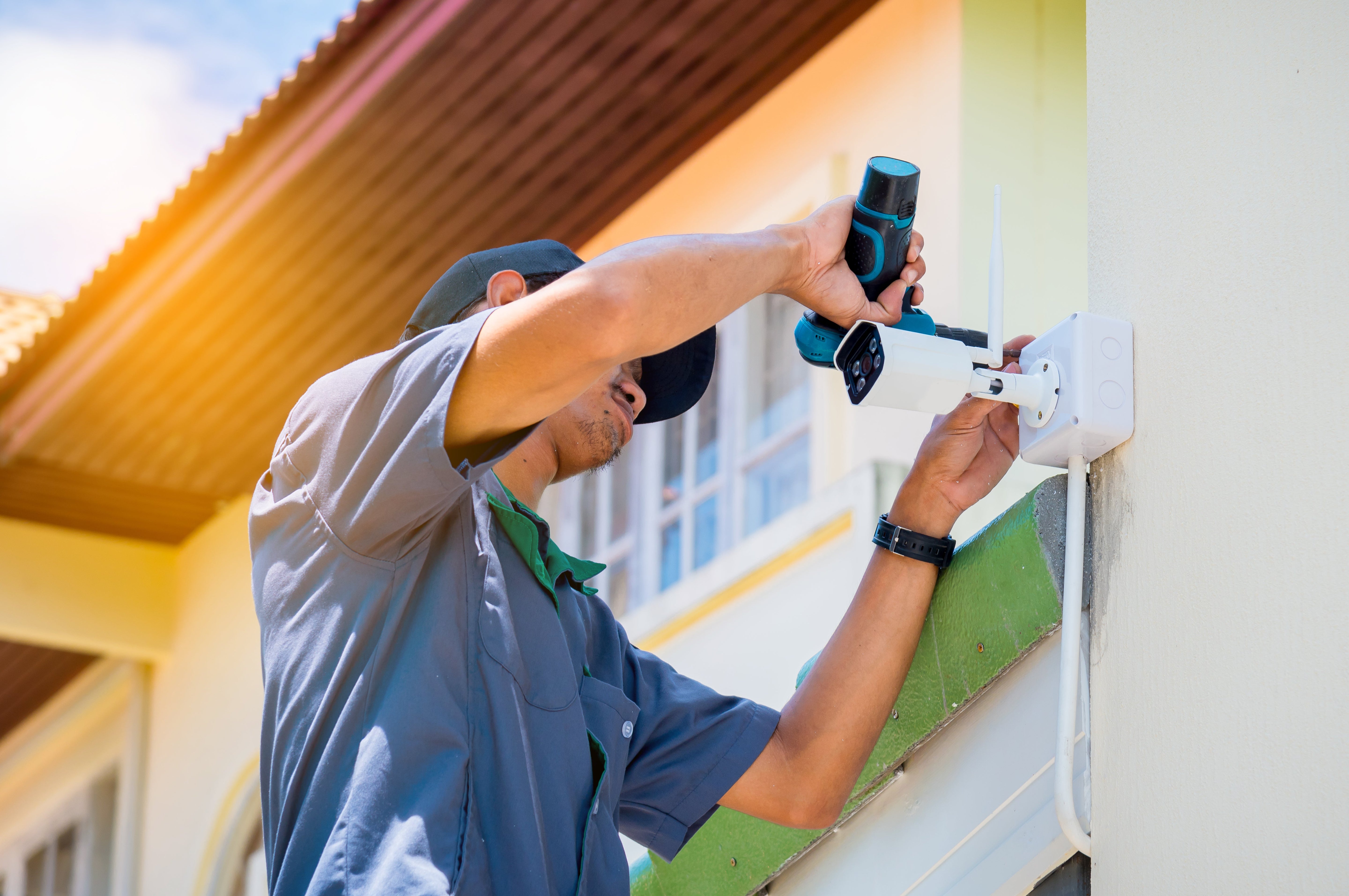
Smart home security has come a long way since motion-sensing floodlights and panic buttons on your alarm system. Today's smart home solutions utilise and integrate all the modern convenience and security-features, including cameras, motion sensors, smart-locks, lights, thermostats, and professional monitoring to ensure your smart home protects what you value most – your family. In this comprehensive guide, you'll learn all there is to know about smart home security, the benefits of proactively protecting your home, how to choose the right solution for your unique home security needs, and how to keep your home safe and system running smoothly for years to come.
What Is Smart Home Security?
A "smart home" is a connected ecosystem of internet-connected devices and services that allow you to control your home appliances and electronics from, for example, a central hub, a cellphone or by voice command. Smart home security integrates systems like smart locks and functions like conditional logic to detect, deter and respond to risks; all while giving you convenient control over your home from anywhere. Smart home security can help you automate everyday routines that prioritise your family's safety; removing the risk of human error and forgetfulness. For example, you can automate your smart home security system to lock doors and turn on outside motion-activated floodlights automatically at a set time each day.
Smart home automation and security can integrate multiple devices and systems seamlessly, including:
- Sensors: door/window, motion, glass-break, water leak, temperature, and smoke/CO₂ detectors.
- Cameras: indoor, outdoor, wire-free, wired, and video doorbells.
- Access control: smart locks and garage controllers.
- Environmental control & automation: thermostats, lights, blinds, and conditional logic scenarios that run on schedules or one-button triggers.
- Apps & platforms: a single app to arm/disarm, view cameras, lock doors, and automate routines.
- Monitoring: professional monitoring that can dispatch help and verify alarms.
Rather than a collection of gadgets, a smart security system acts as a cohesive network. Devices "talk" to one another, so motion at the driveway can turn on floodlights, start recording, and send an alert to your 24/7 SecurTek home monitoring team — without you lifting a finger.
What are the Benefits of Smart Home Security?
1) Smart Home Security Deters Crime
Having visible cameras, smart lighting and signage advertising the use of smart home security measures on your property can deter opportunistic criminals who are looking for easy targets.
2) Smart Home Security Enables Faster Emergency Response TImes
If you do have an emergency at home, whether you are the victim of a crime or are suffering a medical emergency, your smart home security alerts and professional monitoring team can help enable faster emergency response times. Footage from automatic video recordings of such incidents can likewise help law enforcement and/or medical personnel better assist you when your home or your health are in danger.
3) Remote Control & Peace of Mind
Control your home from anywhere in the world and put your mind at ease! You can do all of the following right from your mobile phone:
- Check the live video feed.
- Let the kids in after school and lock up after them.
- Close the garage door you forgot about when you left in a hurry this morning.
- Turn on lights while you're out of town to make the home look lived-in.
3) Smart Home Monitoring
Modern smart home systems aren't only useful for crime deterrence or in case of medical emergency. Your smart home system can also alert you and your SecurTek monitoring team of fire, smoke, high carbon monoxide levels, leaks, freezes and extreme temperatures in your home; allowing you to act quickly before small problems become big ones.
4) Insurance Savings & Evidence
Many insurers will offer you up to 20% off your insurance premiums just for having and maintaining a professionally installed and monitored smart home security system. If you ever need to make a claim, high-quality video and event logs can also provide clear evidence to support your claim; leading to fewer refusals and speeding up claims processing.
5) Smart Home Security Can Reduce Your Carbon Footprint
Automating functions like turning lights off in empty rooms and setting eco-friendly thermostat schedules can help you not only reduce your monthly electricity bill, but also your carbon footprint!
6) Peace of Mind Security for the Whole Family
Whether you’re checking in on your pets on the live feed, confirming your teens got home safely after school, or monitoring your kids on the backyard rink from the comfort of your couch; smart security gives you peace of mind and lets you keep your eyes on the things that matter most without hovering.
What Kinds of Cameras & Devices Work Together?
A well-designed smart home security system starts with cameras that suit your property’s layout and your individual lifestyle requirements.
What Kinds Of Cameras Do I Need?
- Doorbell cameras are your first line of defense. They allow you to identify visitors without opening the door, communicate through two-way radio, and monitor package deliveries and other events occurring on your doorstep without putting yourself at risk.
- Outdoor cameras provide a wider view of your surroundings and exterior property. These are typically weather-resistant units designed to offer coverage for driveways, side gates, backyards and detached garages. These units are also typically equipped with night-vision capabilities to ensure that you're capturing clear footage in low-light conditions and after dark.
- Inside your home, indoor cameras keep an eye on your main living areas and hallways. The live feed and motion detection from these cameras can be used to automate things like lights turning on and off, and can be used to keep an eye on pets, teens and/or service providers when you're not home.
These different kinds of cameras can connect to your smart home network in a variety of ways.
- Wired cameras offer the most reliable and stable connection, and are the most secure from a data-security standpoint. However, they typically require professional installation and/or integration.
- Wireless (WiFi) cameras, meanwhile, typically run on batteries and are the easiest means to DIY smart home security. Because they're reliant on WiFi and batteries, they're only as reliable as your internet connection and your ability to keep them charged or replace their batteries. Due to the heightened risk of human error (forgetting to charge etc.), Jump.ca doesn't offer wireless cameras that run on batteries at this time.
Ultimately, when you're shopping for the right equipment for your smart home security set up, the right choices are the one that work for you and your lifestyle. However, there are a few essentials that you want to focus on regardless of your broader-strokes/higher-level decisions:
- High resolution video is essential to capture finer details like faces or license plates.
- Reliable night vision
- Smart motion detection to reduce the rate of false alerts.
- Ample storage whether on a local SD or in the cloud, and
- Mobile alerts with live view for instant access from anywhere in the world are just a few factors you'll want to consider.
Where Should I Put Up Home Security Cameras?
Placement matters just as much as the quality of your chosen camera equipment. Even the highest quality camera can only capture what it is positioned to cover, so you'll want to cover your bases. Ideally, you should position cameras to cover:
Share:
Powering Local Business in a Digital-First World
FAQ: Smart Home Security Myths Debunked